The short answer
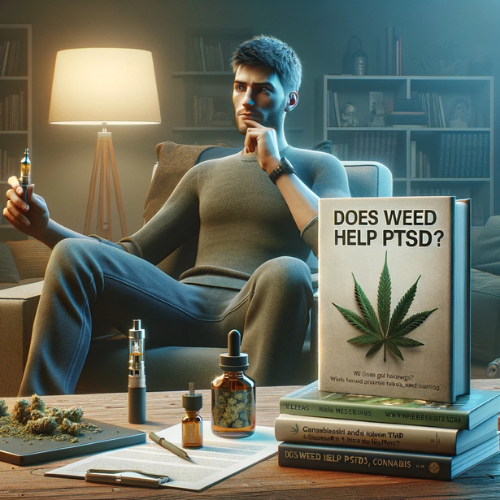
Plenty of people with post-traumatic stress disorder (PTSD) say cannabis helps them sleep or takes the edge off. That experience is real to them, but it is not the same as proof. When researchers have tested cannabis in controlled studies, the results have been mixed at best, and the U.S. Department of Veterans Affairs currently advises against using cannabis to treat PTSD. Here is what the research actually shows, and what it doesn't.
A quick look at PTSD
PTSD can develop after a frightening or dangerous event. People may relive the event through flashbacks or nightmares, avoid reminders of it, have trouble sleeping, and feel on edge long after the danger has passed. The good news is that effective treatments exist. The VA's National Center for PTSD lists trauma-focused talk therapies, such as Cognitive Processing Therapy, Prolonged Exposure and EMDR, along with a few well-studied medications, as the best-supported options.
What the studies show
The best-known clinical trial
The most talked-about placebo-controlled trial of smoked cannabis for PTSD was published in PLOS ONE in 2021. It gave 80 military veterans either placebo or one of three types of cannabis (high-THC, high-CBD, or a mix of THC and CBD) for three weeks. Symptoms improved in every group, including placebo, and none of the cannabis types did statistically better than placebo. The researchers described it as a brief, preliminary trial, so it does not settle the question either way, but it did not show a clear benefit.
What the big reviews say
In 2017, the National Academies of Sciences, Engineering, and Medicine reviewed the research and found only limited evidence of benefit. That conclusion rested on a single small trial of nabilone, a prescription synthetic cannabinoid, in 10 military personnel with trauma-related nightmares. It was a tiny study of a prescription drug, not of the cannabis sold in dispensaries.
A 2019 systematic review in The Lancet Psychiatry looked at cannabinoids across several mental health conditions and concluded there was scarce evidence that they improve PTSD. A newer 2026 meta-analysis in the same journal, which pooled 54 randomized trials across mental health and substance use conditions, found no significant effect on PTSD outcomes and rated the overall quality of the evidence as generally low.
Why personal stories aren't enough
Reports of relief, especially with sleep, are one reason researchers keep studying cannabis for PTSD. But personal stories can't separate the effect of cannabis from placebo effects, the natural ups and downs of symptoms, or other changes in someone's life. That is why controlled trials matter, and so far they have not shown that cannabis works as a PTSD treatment.
The risks to know about
- Symptoms may get worse. The National Academies found limited evidence linking cannabis use with more severe symptoms in people who already have PTSD, and the VA notes some evidence that chronic use may worsen trauma-related symptoms over time.
- Cannabis use disorder. According to the VA, cannabis use disorder is more common among veterans with PTSD, and people with PTSD tend to have stronger cravings and withdrawal when they try to cut back.
- It can get in the way of treatment. The VA reports that cannabis use disorder may predict less improvement during PTSD treatment.
- Effects of heavy, long-term use. Frequent, chronic use is linked with problems such as impaired memory, dependence and, in vulnerable people, psychosis. THC levels in today's products are also much higher than in past decades.
What the VA recommends
The 2023 VA/DoD clinical practice guideline for PTSD strongly recommends against treating PTSD with cannabis or cannabis derivatives, citing the lack of evidence that it works along with its known side effects and risks (VA National Center for PTSD). The VA also points out that people who use cannabis can still start trauma-focused therapy without quitting first, so cannabis use shouldn't stop anyone from getting care.
Talk to your doctor
If you have PTSD and use cannabis, or are thinking about it, be open with your doctor or therapist. They can help you think through how it fits with your treatment plan and any medications you take. Please don't stop or replace prescribed treatment on your own. If you are in crisis, you can call or text 988 any time for free, confidential support.
The bottom line
Research suggests cannabis is not a proven treatment for PTSD. The largest placebo-controlled trial did not find a clear benefit, major reviews rate the evidence as limited or low quality, and there are real risks, especially with frequent use. Future studies may change this picture, but for now the strongest evidence supports established treatments like trauma-focused therapy. Our staff are always happy to answer general questions about cannabis, but we can't give medical advice.
This article is general information, not medical advice.
Sources
- Cannabis Use and PTSD Among Veterans. VA National Center for PTSD, updated 2025. https://www.ptsd.va.gov/professional/treat/cooccurring/marijuana_ptsd_vets.asp
- The short-term impact of 3 smoked cannabis preparations versus placebo on PTSD symptoms: A randomized cross-over clinical trial (Bonn-Miller et al.). PLOS ONE, 2021. https://journals.plos.org/plosone/article?id=10.1371/journal.pone.0246990
- The Health Effects of Cannabis and Cannabinoids, Chapter 4: Therapeutic Effects of Cannabis and Cannabinoids. National Academies of Sciences, Engineering, and Medicine, 2017. https://www.nationalacademies.org/read/24625/chapter/6
- The Health Effects of Cannabis and Cannabinoids, Chapter 12: Mental Health. National Academies of Sciences, Engineering, and Medicine, 2017. https://www.nationalacademies.org/read/24625/chapter/14
- Cannabinoids for the treatment of mental disorders and symptoms of mental disorders: a systematic review and meta-analysis (Black et al.). The Lancet Psychiatry, 2019. https://pmc.ncbi.nlm.nih.gov/articles/PMC6949116/
- The efficacy and safety of cannabinoids for the treatment of mental disorders and substance use disorders: a systematic review and meta-analysis (Wilson et al.). The Lancet Psychiatry, 2026. https://researchportal.bath.ac.uk/en/publications/the-efficacy-and-safety-of-cannabinoids-for-the-treatment-of-ment/
- PTSD Treatment Basics. VA National Center for PTSD, accessed October 2026. https://www.ptsd.va.gov/understand_tx/tx_basics.asp
- 988 Suicide & Crisis Lifeline. 988 Lifeline, accessed October 2026. https://988lifeline.org/